
-
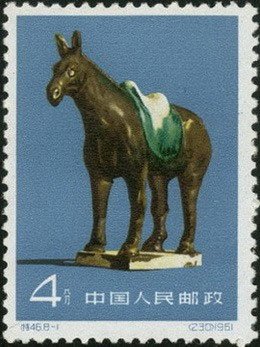
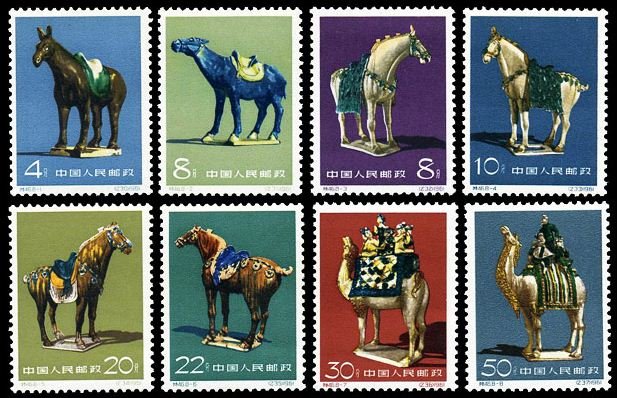
- (8-1), Donkey, 4 fen, 26.5*36 mm
-

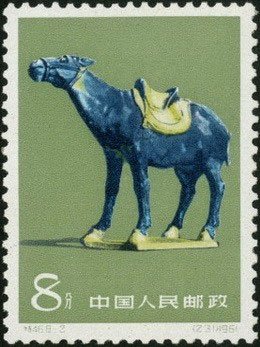
- (8-2), Donkey, 8 fen, 26.5*36 mm
-
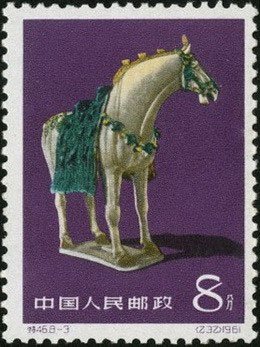
- (8-3), Horse, 8 fen, 26.5*36 mm
-
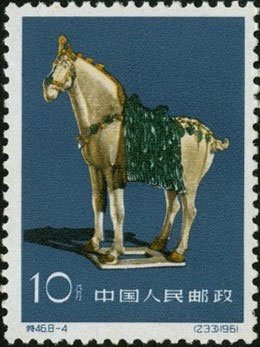
- (8-4), Horse, 10 fen, 26.5*36 mm
-
- (8-5), Horse, 20 fen, 26.5*36 mm

-
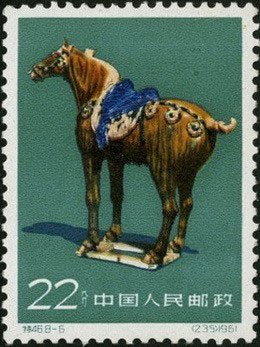
- (8-6), Horse, 22 fen, 26.5*36 mm
-
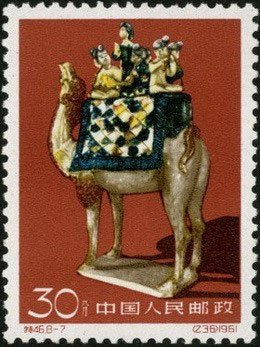
- (8-7), Camel, 30 fen, 26.5*36 mm
-
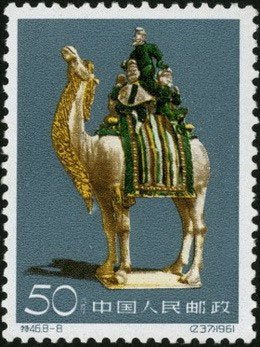
- (8-8), Camel, 50 fen, 26.5*36 mm
S46 Tri-Coloured Pottery of Tang Dynasty Special Stamps
Basic Information
Stamp Title: Tri-Coloured Pottery of Tang Dynasty
Serial number: S46 / TE6
Values in set: 8
Total face value: 122 fen
Date of issue: November 10, 1961
(8-1) Donkey, 4 fen, 26.5 × 36 mm, perforation 11.5 × 11, sheet composition 50(10×5), quantity issued: 5,000,000
(8-2) Donkey, 8 fen, 26.5 × 36 mm, perforation 11.5 × 11, sheet composition 50(10×5), quantity issued: 9,000,000
(8-3) Horse, 8 fen, 26.5 × 36 mm, perforation 11.5 × 11, sheet composition 50(10×5), quantity issued: 9,000,000
(8-4) Horse, 10 fen, 26.5 × 36 mm, perforation 11.5 × 11, sheet composition 50(10×5), quantity issued: 4,000,000
(8-5) Horse, 20 fen, 26.5 × 36 mm, perforation 11.5 × 11, sheet composition 50(10×5), quantity issued: 3,000,000
(8-6) Horse, 22 fen, 26.5 × 36 mm, perforation 11.5 × 11, sheet composition 50(10×5), quantity issued: 1,500,000
(8-7) Camel, 30 fen, 26.5 × 36 mm, perforation 11.5 × 11, sheet composition 50(10×5), quantity issued: 1,500,000
(8-8) Camel, 50 fen, 26.5 × 36 mm, perforation 11.5 × 11, sheet composition 50(10×5), quantity issued: 1,500,000
Designer: Lu Tianjiao
Printing process: Photogravure
Printer: Beijing Postage Stamp Printing Works
Introduction
Tang Sancai (Tri-Coloured Pottery of Tang Dynasty) refers to glazed pottery and figurines of the Tang Dynasty. It mainly uses lead glazes in yellow, green and white, though blue, ochre and other colours are also applied. The craft inherited glazed pottery techniques from the Han Dynasty. During firing, flowing coloured glazes blend naturally to create rich, variegated lustre. It integrates sculpture and painting, with refined shapes and durable glaze. Major kilns were located in Chang’an (West Kiln) and Luoyang (East Kiln). Most Tang Sancai pieces were burial wares for nobles, including figurines of humans, horses, donkeys and camels, as well as tableware. It peaked in the early and prosperous Tang periods and became the foundation for later Sancai wares of the Song, Liao and Ming dynasties. Exported widely along ancient trade routes, it influenced ceramic craftsmanship across Asia, Africa and Europe. This set focuses on the most classic animal figurines: donkeys, horses and camels, representative of Tang aesthetics. Issued on November 10, 1961 by the Ministry of Posts and Telecommunications, it showcases the brilliant pottery heritage of ancient China.
特46《唐三彩》特种邮票
基础信息
志号:特46(S46 / TE6)
全套枚数:8枚
全套面值:122分
发行日期:1961年11月10日
(8-1)驴,4分,26.5×36毫米,齿孔11.5×11度,整版50枚(10×5),发行量500万枚
(8-2)驴,8分,26.5×36毫米,齿孔11.5×11度,整版50枚(10×5),发行量900万枚
(8-3)马,8分,26.5×36毫米,齿孔11.5×11度,整版50枚(10×5),发行量900万枚
(8-4)马,10分,26.5×36毫米,齿孔11.5×11度,整版50枚(10×5),发行量400万枚
(8-5)马,20分,26.5×36毫米,齿孔11.5×11度,整版50枚(10×5),发行量300万枚
(8-6)马,22分,26.5×36毫米,齿孔11.5×11度,整版50枚(10×5),发行量150万枚
(8-7)骆驼,30分,26.5×36毫米,齿孔11.5×11度,整版50枚(10×5),发行量150万枚
(8-8)骆驼,50分,26.5×36毫米,齿孔11.5×11度,整版50枚(10×5),发行量150万枚
设计者:卢天骄
版别:影写版
印制厂:北京邮票厂
介绍
唐三彩是唐代釉陶与陶俑的统称,以黄、绿、白为主色,同时运用赭、蓝等多种铅釉,并非只有三种色彩。工艺承袭汉代釉陶,利用烧制时釉料自然流淌交融的特性,形成变幻斑斓、温润光亮的釉色效果。它融合雕塑、绘画技法,造型精巧,胎釉坚固耐久。主窑址分为长安西窑、洛阳东窑,制品多为贵族随葬冥器,包含人物、动物俑以及盘壶罐等日用器皿,折射唐代厚葬风尚,在初唐至盛唐达到艺术高峰。唐三彩是宋三彩、辽三彩、明三彩的工艺源头;依托唐代对外交流,大量远销亚非欧多国,带动海外陶瓷工艺发展。其中马、驴、骆驼俑最具盛唐气质,也是这套邮票选取的主题。邮电部1961年11月10日发行本套特种邮票,展现中国古代陶器璀璨的艺术成就。
S46 Cerámica Tricolor de la Dinastía Tang Sellos Especiales
Información básica
Número de serie: S46 / TE6
Cantidad: 8 sellos
Valor total: 122 fen
Fecha de emisión: 10 de noviembre de 1961
(8-1) Burro, 4 fen, 26.5 × 36 mm, dentado 11.5 × 11, pliego 50(10×5), tirada: 5.000.000
(8-2) Burro, 8 fen, 26.5 × 36 mm, dentado 11.5 × 11, pliego 50(10×5), tirada: 9.000.000
(8-3) Caballo, 8 fen, 26.5 × 36 mm, dentado 11.5 × 11, pliego 50(10×5), tirada: 9.000.000
(8-4) Caballo, 10 fen, 26.5 × 36 mm, dentado 11.5 × 11, pliego 50(10×5), tirada: 4.000.000
(8-5) Caballo, 20 fen, 26.5 × 36 mm, dentado 11.5 × 11, pliego 50(10×5), tirada: 3.000.000
(8-6) Caballo, 22 fen, 26.5 × 36 mm, dentado 11.5 × 11, pliego 50(10×5), tirada: 1.500.000
(8-7) Camello, 30 fen, 26.5 × 36 mm, dentado 11.5 × 11, pliego 50(10×5), tirada: 1.500.000
(8-8) Camello, 50 fen, 26.5 × 36 mm, dentado 11.5 × 11, pliego 50(10×5), tirada: 1.500.000
Diseñadora: Lu Tianjiao
Impresión: Fotograbado
Impresor: Fábrica de sellos postales de Beijing
Introducción
La cerámica tricolor de la Dinastía Tang (Sancai) es una cerámica vidriada característica de la época Tang. Usa esmaltes de plomo en tonos amarillo, verde y blanco, además de otros colores. Su técnica deriva de la cerámica vidriada Han. Al cocerse, los esmaltes fluyen y se mezclan, creando colores variados y brillantes. Combina escultura y pintura, con formas elegantes. Los hornos principales estaban en Chang’an y Luoyang. La mayoría eran piezas funerarias para nobles, como figuras de personas, caballos, burros y camellos. Alcanzó su apogeo en la Dinastía Tang temprana y próspera, y fue el origen de las cerámicas tricolor de las dinastías Song, Liao y Ming. Se exportó por todo el mundo e influyó en la cerámica de Asia, África y Europa. Esta serie presenta los animales icónicos del Sancai: burros, caballos y camellos. Se emitió en 1961 para mostrar la herencia alfarera antigua de China.
S46 الطوابع الخاصة بالفخار ثلاثي الألوان من أسرة تانغ
المعلومات الأساسية
الرقم التسلسلي: S46 / TE6
العدد: 8 طوابع
القيمة الإجمالية: 122 فن
تاريخ الإصدار: 10 نوفمبر 1961
(8-1) حمار، 4 فن، 26.5 × 36 ملم، درجة التسنن 11.5 × 11، عدد الطوابع في الورقة 50(10×5)، الكمية: 5000000
(8-2) حمار، 8 فن، 26.5 × 36 ملم، درجة التسنن 11.5 × 11، عدد الطوابع في الورقة 50(10×5)، الكمية: 9000000
(8-3) حصان، 8 فن، 26.5 × 36 ملم، درجة التسنن 11.5 × 11، عدد الطوابع في الورقة 50(10×5)، الكمية: 9000000
(8-4) حصان، 10 فن، 26.5 × 36 ملم، درجة التسنن 11.5 × 11، عدد الطوابع في الورقة 50(10×5)، الكمية: 4000000
(8-5) حصان، 20 فن، 26.5 × 36 ملم، درجة التسنن 11.5 × 11، عدد الطوابع في الورقة 50(10×5)، الكمية: 3000000
(8-6) حصان، 22 فن، 26.5 × 36 ملم، درجة التسنن 11.5 × 11، عدد الطوابع في الورقة 50(10×5)، الكمية: 1500000
(8-7) جمل، 30 فن، 26.5 × 36 ملم، درجة التسنن 11.5 × 11، عدد الطوابع في الورقة 50(10×5)، الكمية: 1500000
(8-8) جمل، 50 فن، 26.5 × 36 ملم، درجة التسنن 11.5 × 11، عدد الطوابع في الورقة 50(10×5)، الكمية: 1500000
المصممة: لو تيان جياو
طريقة الطباعة: الطباعة الضوئية المنقوشة
المطبعة: مطبعة طوابع البريد ببكين
المقدمة
الفخار ثلاثي الألوان من أسرة تانغ هو فخار مزجج مميز في تلك الفترة. يعتمد على طلاء الرصاص بألوان أصفر وأخضر وأبيض، مع ألوان أخرى. ورث تقنيات الفخار المزجج من أسرة هان، وتتدفق الألوان أثناء الحرق لتتداخل وتعطي تألقًا رائعًا. يجمع بين النحت والرسوم، وتتميز أشكاله بالأناقة. كانت الأفران الرئيسية في تشانغآن ولويانغ، وكانت معظم القطع تُستخدم كأدوات جنازة للنبلاء، مثل تماثيل الخيول والحمير والجمال. وصل إلى ذروته في أوائل وعصر ازدهار أسرة تانغ، وكان مصدر إلهام للفخار في الأسرات اللاحقة. صُدّر إلى دول كثيرة في آسيا وأفريقيا وأوروبا، وأثر على صناعة الفخار فيها. هذه المجموعة تعرض تماثيل الحمير والخيول والجمال، وهي رموز فنية لثقافة تانغ. صدرت الطوابع في 10 نوفمبر 1961 لإظهار تراث الفخار الصيني القديم.
Leave A Comment
You must be logged in to post a comment.