
-

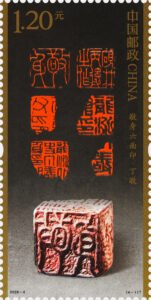
- (4-1), Six‑Faced Self‑Seal – Ding Jing, 120 fen, 30 * 60 mm
-
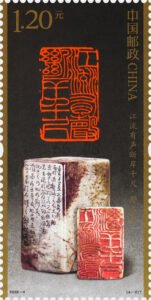
- (4-2), The River Roars; Steep Cliffs Stretch a Thousand Feet – Deng Shiru, 120 fen, 30 * 60 mm
-
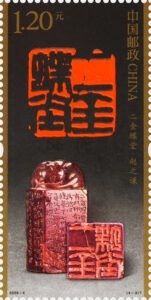
- (4-3), Hall of Two Golden Butterflies – Zhao Zhiqian, 120 fen, 30 * 60 mm
-
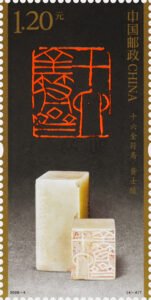
- (4-4), Studio of Sixteen Golden Tally Charms – Huang Shiling, 120 fen, 30 * 60 mm
Serial number: 2026-4
Values in set: 4
(4-1), Six‑Faced Self‑Seal – Ding Jing, 120 fen, 30 * 60 mm
The River Roars; Steep Cliffs Stretch a Thousand Feet – Deng Shiru
(4-2), The River Roars; Steep Cliffs Stretch a Thousand Feet – Deng Shiru, 120 fen, 30 * 60 mm
Hall of Two Golden Butterflies – Zhao Zhiqian
(4-3), Hall of Two Golden Butterflies – Zhao Zhiqian, 120 fen, 30 * 60 mm
Studio of Sixteen Golden Tally Charms – Huang Shiling
(4-4), Studio of Sixteen Golden Tally Charms – Huang Shiling, 120 fen, 30 * 60 mm
Chinese Seal Engraving (3) (Mini Sheet)
(1-1s), Chinese Seal Engraving (3) (Mini Sheet), 960 fen, 200 * 150 mm
Date of issue: April 20th, 2026
Denomination: 480 fen
Designer: Yu Xue
Size of stamps: 30 * 60 mm
Perforation: 13.5 * 13
Sheet composition:
12 for Sheet I;
8 for Sheet II (2 sets)
150 * 215 mm for Sheet I;
200 * 150 mm for Sheet II
Printing process: Offset
Printing House:
Sheet I: Beijing Postage Stamp Printing Works
Sheet II: Henan Post and Telecommunication Technology Co., Ltd.
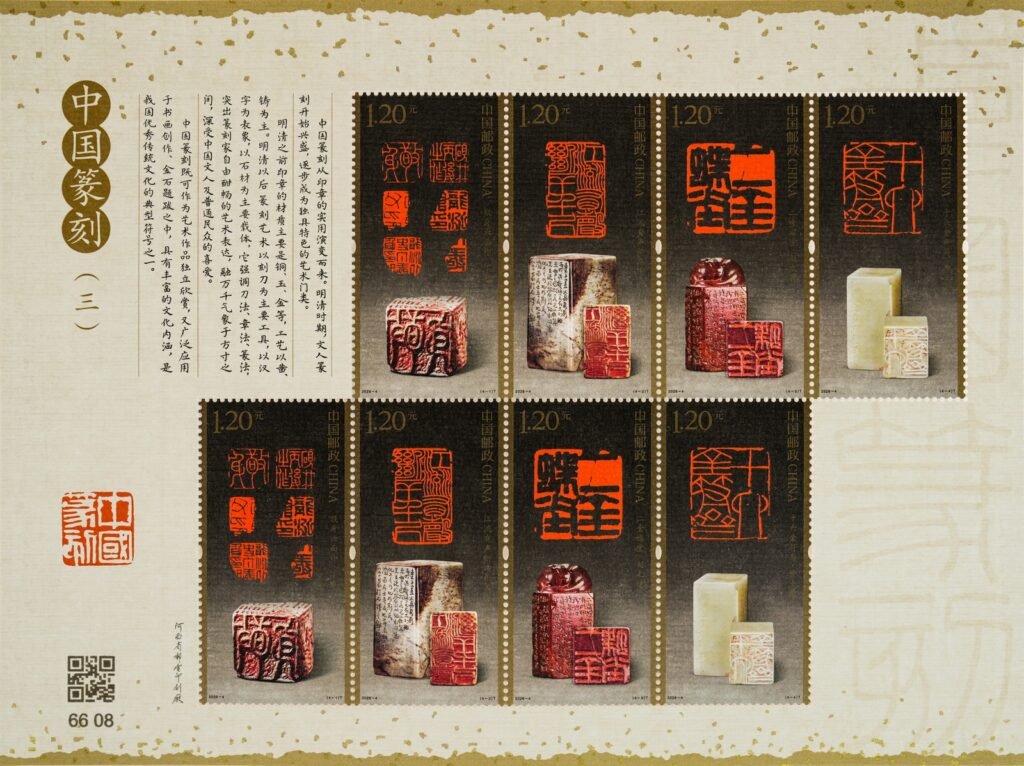
(1-1s), Chinese Seal Engraving (3) (Mini Sheet), 960 fen, 200 * 150 mm
中国邮政2026年4月20日发行《中国篆刻(三)》特种邮票1套4枚。
志号:2026-4
邮票规格:30×60毫米
齿孔度数:13.5×13度
整张枚数:版式一 12枚,版式二 (宣纸品种)8枚(2套)
整张规格:版式一 150×215毫米,版式二 200×150毫米
版别:胶印(版式一采用局部压凸工艺;版式二采用局部丝网工艺)
防伪方式:防伪纸张、防伪油墨、异形齿孔、荧光喷码
设计者:于雪
资料提供:上海博物馆、西泠印社社务委员会、君匋艺术院
印制厂:版式一 北京邮票厂有限公司,版式二 河南省邮电科技有限公司
计划发行数量:套票392.6万套,版式二53.2万版
Background:
China Post plans to issue a special stamp set Chinese Seal Carving (III) on April 20, 2026, containing four individual stamps. The stamp designs are titled:
Six‑Faced Self‑Seal – Ding Jing’s
The River Roars; Steep Cliffs Stretch a Thousand Feet – Deng Shiru
Hall of Two Golden Butterflies – Zhao Zhiqian
Studio of Sixteen Golden Tally Charms – Huang Shiling
The total face value of the four‑stamp set is 4.80 yuan. The planned circulation is 3.926 million regular sets and 532,000 sheetlet panes.
Seal carving art is a splendid treasure of traditional Chinese visual culture, bearing the enduring and evolving civilizational marks of the Chinese nation. Taking seals as its carrier and nurtured by thousands of years of cultural heritage, it has been refined through the ingenuity and artistic creation of literati across dynasties, evolving into a unique and irreplaceable Eastern art form admired worldwide. As a globally renowned cultural symbol, Chinese seal carving integrates practical authentication functions with profound aesthetic value. Within the tiny space of a seal lies the elegance of millennia, worthy of collection and inheritance by cultural enthusiasts for generations.
The first stamp features Six‑Faced Self‑Seal by Ding Jing. As the founding master of the Zhe School of seal carving and the leading figure of the Eight Masters of Xiling, Ding Jing pioneered the cutting knife technique, forming a concise, powerful and simple artistic style. This six‑faced personal seal ranks among his most important lifetime works. Originally a mother‑and‑son seal carved by Liang Qianqiu in the late Ming Dynasty, the stone was acquired by Ding Jing, who first engraved five sides and later added the sixth side bearing the inscription Made after the Bing Year by Yanlin following a fire accident. Its two red inscriptions follow small seal script with lean, firm and upright lines; the four white inscriptions adopt Han archaic seal script, featuring a neat, dense, vivid and extraordinary layout, fully embodying his core artistic proposition that “ancient seal carvers sought to break away from conventional norms”.
The second stamp presents Deng Shiru’s famous seal The River Roars; Steep Cliffs Stretch a Thousand Feet. Deng Shiru, the pioneer of Qing‑dynasty stele studies and the culminating master of the Wan School of seal carving, established the groundbreaking artistic concept of “integrating calligraphy into seal carving”. Inspired by Su Shi’s Ode to the Red Cliff (Part II), this seal was carved to thank a friend for gifting an ancient rubbing of Crane Burial Inscription. Infused with the brushwork of small seal script, the eight characters on the seal feature a compact left layout and a spacious right layout, reflecting his famous aesthetic theory: “sparse spaces may let a horse gallop through, while dense gaps leave no breath of wind”. Carved with smooth and unrestrained pressing knife strokes, it bears three sides of cursive inscriptions adapted to the stone’s natural shape. The inherent stone textures echo the scenery of the Red Cliff, creating a vast, powerful and profound artistic conception and securing its status as an immortal masterpiece in Qing‑dynasty seal carving history.
The third stamp showcases Zhao Zhiqian’s seal Hall of Two Golden Butterflies. A pioneering reformer of late Qing seal carving, Zhao Zhiqian advocated “drawing creative inspiration beyond traditional seal patterns”, widely incorporating characters from ancient steles, bronze mirrors and other classical inscriptions into his works. Hall of Two Golden Butterflies is his personal white‑script studio seal, named after an auspicious legend of his ancestors who witnessed “two golden butterflies hovering around”. Its seal script derives from Han casting inscriptions and Six Dynasties stele calligraphy. In composition, the broken‑edge structure of the character “Two” echoes the character “Hall”, while the slanted strokes of “Butterfly” eliminate rigidness, perfectly interpreting the subtle balance between extreme sparseness and density. He combined pressing and cutting knife techniques to unify cutting force and calligraphic charm. Its side inscriptions adopt Northern Wei stele styles with direct single‑blade carving, conveying deep remembrance and respect for his ancestors.
The fourth stamp features Huang Shiling’s Studio of Sixteen Golden Tally Charms. Founder of the Yishan School, Huang Shiling opposed the deliberate imitation of weathered and worn ancient Han seals, arguing that such textures formed naturally over time. He pursued a refined, neat, elegant and authentic artistic style. The Studio of Sixteen Golden Tally Charms belonged to Wu Dacheng, a renowned epigrapher and antiquarian, who collected sixteen ancient bronze and golden tally charms, hence the studio’s name. Crafted primarily in small seal script with integrated bronze inscription elements, the five characters are arranged in two vertical columns with striking contrasts between sparseness and density. Executed mainly with pressing knife strokes, the lines are sleek, sharp and powerful, revealing subtle agility within poised solemnity. Its side inscriptions are carved in Northern Wei regular script with single blades, resembling miniature stone steles and fully realizing his artistic pursuit of “extraordinary charm within balanced composure”.
Seal carving of this period inherited the epigraphic scholarship of the Qianlong and Jiaqing eras. Breaking the shackles of traditional schools, it embraced diversified innovation and marked a crucial turning point for the transition from classical to modern seal art. Masters of this era rooted their creations in epigraphy, retaining the essence of Qin and Han traditions while developing distinctive personal styles. They blended pressing and cutting knife techniques, emphasized the interplay of void and solid in layout, prioritized the integration of seal carving and calligraphy, and infused seal script brushwork into carving craftsmanship. Side inscriptions complemented seal faces perfectly, jointly reaching the supreme artistic realm of “unified principles in calligraphy and seal carving”. This artistic trend guided seal carving away from rigid ancient imitation toward free expressive creation, opening up new artistic horizons for future generations of seal carvers.
The entire stamp set features crisp artwork with deep black as the dominant background, creating a striking visual contrast with bright red seal inscriptions. The regular sheet (Format I) adopts high‑precision six‑color offset printing combined with three‑dimensional embossing technology. High‑bright red ink is used for seal inscriptions, delivering rich, translucent vermilion tones that replicate the classic texture of traditional cinnabar seal paste. Special gold ink highlights titles, face values and other key information. The classic color combination of red, gold and black creates layered visuals and a clear thematic presentation. Three‑dimensional embossing is applied to seal inscriptions, carved surfaces and stone textures, vividly restoring the complete form of seal stones, carved surfaces and character strokes. The flat stamps take on a relief‑like three‑dimensional effect, reproducing the texture of chiseled jade and stone in traditional seal carving. With upgraded tactile and visual experiences, the stamps deliver an immersive artistic experience that is visible, touchable and perceptible, showcasing exquisite printing craftsmanship and high collectible value.
The border decorations of Format II sheetlets adopt gold dust sprinkling craftsmanship, unfolding a three‑thousand‑year cultural legacy forged by knife and stone through modern printing techniques and leading viewers into an artistic palace of epigraphic art. Printed on anti‑counterfeit rice paper, the stamps exude classical elegance. They silently carry forward traditional Chinese culture, restore the charm of stone carving and brush aesthetics within a miniature frame, and fully demonstrate the outstanding artistic expression and profound cultural connotation of the stamps.
Key words:
Chinese Seal Carving:中国篆刻
Six‑Faced Self‑Seal:六面自刻印
The River Roars; Steep Cliffs Stretch a Thousand Feet:江流有声,断岸千尺
Hall of Two Golden Butterflies:二金蝶堂
Studio of Sixteen Golden Tally Charms:十六金符斋
Zhe School:浙派;Wan School:皖派;Yishan School:黟山派
Eight Masters of Xiling:西泠八家
cutting knife technique:切刀技法;pressing knife strokes:冲刀
small seal script:小篆;Han archaic seal script:汉印;Northern Wei stele:北魏碑刻
sheetlet panes:小版张;three‑dimensional embossing:压凸 / 浮雕工艺;cinnabar seal paste:朱砂印泥
anti‑counterfeit rice paper:防伪宣纸
中国邮政2026年4月20日发行《中国篆刻(三)》特种邮票1套4枚。
(4-1)T 敬身六面印·丁敬 1.20元
(4-2)T 江流有声断岸千尺·邓石如 1.20元
(4-3)T 二金蝶堂·赵之谦 1.20元
(4-4)T 十六金符斋·黄士陵 1.20元
P.S. 篆刻艺术是中华传统视觉文化的璀璨瑰宝,镌刻着中华民族生生不息、绵延发展的文明印记。它以印章为载体,在千年文脉滋养中,经历代文人匠心赋能与艺术创造,淬炼成为世界上独树一帜、无可替代的东方篆刻艺术。中国篆刻作为享誉世界的文化符号,兼具凭信实用价值与艺术审美意蕴,方寸之间藏尽千年风雅,值得每一位文化爱好者倾心珍藏、世代传扬。
邮票第一枚内容为丁敬的《敬身六面印》。丁敬是浙派篆刻开山鼻祖,西泠八家之首。他独创切刀法,风格清刚朴茂。《敬身六面印》为其一生非常重要的自用印。此石原为明末梁千秋所刻子母印,丁敬偶得后制成五面,后经火灾补刻第六面“砚林丙后之作”。朱文两面取法小篆,线条瘦硬挺拔;白文四面取法汉缪篆,方正茂密而生动奇崛,完美践行“古人篆刻思离群”的印学主张。
邮票第二枚为邓石如的《江流有声断岸千尺》。邓石如为清代碑学开山宗师、皖派篆刻集大成者,开创“以书入印”范式。此印取意苏轼《后赤壁赋》,为答谢友人赠《瘗鹤铭》旧拓而刻。篆法融入小篆笔意,印面八字呈左密右疏格局,践行“疏处可以走马,密处不使透风”之理论。冲刀运笔,爽利畅达;三面行草边款因石赋形,天然纹理暗合赤壁之境,意境苍浑雄阔,堪称清代篆刻史不朽丰碑。
邮票第三枚为赵之谦的《二金蝶堂》。赵之谦为晚清篆刻革新大师,力主“印外求印”,广取碑版、镜铭等文字入印。《二金蝶堂》为其白文斋馆自用印,斋号源于先祖“双金蝶入怀”的吉兆。篆法取法汉铸印与六朝碑刻,章法上“二”字破边与“堂”字呼应,“蝶”字取斜势祛除板滞,尽显“疏可走马,密不容针”之妙。刀法冲切兼用,刀笔相融;边款以北碑为宗,单刀直入,寄托祖德深情。
邮票第四枚为黄士陵的《十六金符斋》。黄士陵是黟山派创始人,主张“汉印剥蚀,年深使然,何必效颦”,追求光洁妍美、返璞归真。十六金符斋为金石学家吴大澂的斋号,吴氏珍藏古铜虎符、金符十六品,故名其斋。此印篆法取法小篆,兼融金文,五字分二列左右布局,疏密对比强烈。冲刀为主,线条光洁锐劲,平正中暗藏灵动。边款以魏碑楷书单刀刻成,宛若微型碑版,完美践行“平正中见奇崛”的艺术追求。
这一时期篆刻上承乾嘉金石学余脉,在突破传统流派桎梏中走向多元革新,成为古典向现代转型的重要节点。此期诸家以金石学为基,既守秦汉遗韵,又显个性新趣。刀法兼冲、切之变,布局重虚实呼应,更以“书印合一”为要,以篆籀笔意入刀。边款与印面相得益彰,共同构筑“书印同法”的至高境界。此风既开,篆刻渐从摹古转向写意,为后世印人拓出新境。
本套邮票整体画面清晰,深邃黑色作为主体背景,与明艳的红色印文形成强烈视觉对比。版式一邮票采用“高精度胶版六色+三维起凸”工艺印制,印文部分采用高亮红墨,呈现出饱满通透的朱红色,保留传统篆刻“朱膘印泥”的韵味;专金色运用于邮票文字部分,突出票名、面值等关键信息,与红色印文、黑色底色形成“红—金—黑”经典三色搭配,视觉层次丰富,主题一目了然。邮票在印文、印面与印石部分运用三维起凸工艺,让印文与印面的笔画、印石的轮廓立体呈现,真实复刻从印石、印面到印文笔画的完整形态,由点到面、由文到石,让平面邮票呈现出立体浮雕效果,还原传统篆刻刀凿玉石的质感,让篆刻艺术立体呈现,触感与视觉双重升级,实现“可视、可触、可感”的沉浸式艺术体验,尽显精湛邮票工艺和浓郁典藏质感。
版式二边饰采用洒金工艺效果,仿佛用现代印刷工艺吹开历经三千余年刀石相传的文脉故事,带人们走进金石交响的艺术殿堂。防伪宣纸印制将邮票衬托得愈发古朴典雅,在无声中传承中华文化,于方寸间还原篆刻金石韵味与笔墨质感,完美展现邮票的艺术表现力与文化内涵。
Leave A Comment
You must be logged in to post a comment.