
-

- 2023-21 National Archeology Site Park

-
- 2023-21 National Archeology Site Park
-
- 2023-21 National Archeology Site Park
-
- 2023-21 National Archeology Site Park
Stamp Title: National Archeology Site Park
Serial number: 2023-21
Values in set: 4
(4-1), Liangzhu National Archeology Heritage Park, 120 fen, 50 * 30 mm
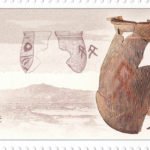
(4-2), Taosi Temple Relics, 120 fen, 50 * 30 mm
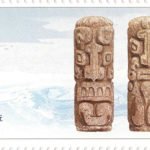
(4-3), Shimao City Ruins, 120 fen, 50 * 30 mm
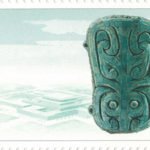
(4-4), Erlitou Ruins, 120 fen, 50 * 30 mm
(1-1s), National Archeology Site Park (Full Sheet), 5760 fen, 186 * 156 mm
(1-1fdc), National Archeology Site Park (FDC), 480 fen
Date of issue: October 17, 2023
Denomination: 480 fen
Designer: Wang Huming
Size of stamps: 50 * 30 mm
Perforation: 13
Sheet composition: 12
Size of sheet: 186 * 156 mm
Printing process: Offset + Engraving
Printing House: Beijing Postage Stamp Printing Works
The theme of this stamp issue is “Exploring the Origins of Chinese Civilization”. Among them, the Liangzhu National Archaeological Site Park is located in Hangzhou City, Zhejiang Province, with a site of about 5,300-4,300 years ago, with a triple city site and a huge water conservancy engineering system, which is a sacred place that proves the history of Chinese civilization for 5,000 years. The selection of cultural relics is the trident vessel, which is the headdress insert of the leader of the Liangzhu cultural period, mostly plain face, the surface of the utensils is engraved with the emblem, the middle part is the animal face, the left and right are the feather crown human face, the shape is regular, the decoration is exquisite, and it reflects the extremely high technical level of the jade trident ware production in the early and middle period of Liangzhu.
Taosi National Archaeological Site Park is located in Linfen City, Shanxi Province, with a site dating back to about 4300-3900 years ago, and is an important research object for exploring Xia culture and its early culture in the middle reaches of the Yellow River. The cultural relics are selected as Zhu Shubian pot, and the surface of the vessel is written with two characters like cinnabar brush-like utensils, the word has a pen edge, one word is interpreted as “Wen”, and the other word has a variety of interpretations such as “Yao”, “Yu” and “Yi” in the academic circles. The discovery of the Zhushu script has important reference value for exploring the origin and formation of Chinese characters.
Located in Shenmu City, Shaanxi Province, the Shiyuan National Archaeological Site Park is about 4300-4000 years old, and is an important research object for exploring Xia culture in the Hetao area in the middle reaches of the Yellow River. The cultural relics are selected as the stone carving of the god’s face pillar, and the stone carving pillar has a relief god face on both sides, one is angry and one is quiet, and the expression is vivid, which provides a rare empirical evidence for understanding the artistic attainments and spiritual beliefs of early Chinese civilization.
Erlitou National Archaeological Site Park is located in Luoyang City, Henan Province, the site is about 3800-3500 years ago, is the largest settlement in China and even East Asia at that time, and has important reference value for the study of the origin of Chinese civilization, the rise of the state, the origin of the city, the construction of the royal capital, the customization of the royal palace and other major issues. The selection of cultural relics is inlaid with turquoise animal face pattern bronze medallion, which is framed in bronze, with symmetrical ring buttons on both sides, with hundreds of pieces of turquoise inlaid into the animal face pattern, composite technology, exquisite production.
The cultural relics and contents of the stamp design shall be recommended and confirmed by the relevant units organized by the State Administration of Cultural Heritage. The foreground of the stamp pattern shows the representative cultural relics unearthed from each site, with the corresponding historical relics and characteristic landscapes in the background, highlighting the historical texture and showing the magnificent historical and cultural relics. The stamps were designed by Wang Huming, Beijing Stamp Factory Co., Ltd. was printed by the rubber carving overprinting process, in order to highlight the artistic characteristics of the cultural relics, the four stamps used four different colors of engraving ink, highlighting the color characteristics of the cultural relics.
2023年特种邮票《国家考古遗址公园》
中国邮政2023年10月17日发行《国家考古遗址公园》特种邮票1套4枚。
(4-1)T 良渚国家考古遗址公园 1.20元
(4-2)T 陶寺国家考古遗址公园 1.20元
(4-3)T 石峁国家考古遗址公园 1.20元
(4-4)T 二里头国家考古遗址公园 1.20元
志号:2023-21
邮票规格:50×30毫米
齿孔度数:13度
整张枚数:12枚
整张规格:186×156毫米
版别:胶雕套印
防伪方式:防伪纸张、防伪油墨、异形齿孔、荧光喷码
设计者:王虎鸣
雕刻者:原艺珊、刘明慧
资料提供:良渚国家考古遗址公园、陶寺国家考古遗址公园、石峁国家考古遗址公园、二里头国家考古遗址公园、中国社会科学院考古研究所
印制厂:北京邮票厂有限公司
计划发行数量:701.7万套
P.S. 此套邮票以“中华文明探源”为主题。其中,良渚国家考古遗址公园位于浙江省杭州市,遗址距今约5300-4300年,具有三重城址和庞大水利工程系统,是实证中华五千年文明史的圣地。选取文物为三叉形器,该器是良渚文化时期首领的头饰插件,多为素面,器物表面施刻神徽,中部为兽面,左右为羽冠人面,形制规整、纹饰精美,体现了良渚早中期玉三叉形器制作的极高工艺水准。
陶寺国家考古遗址公园位于山西省临汾市,遗址距今约4300-3900年,是黄河中游地区探索夏文化及其前期文化的重要研究对象。选取文物为朱书扁壶,其器表用朱砂似毛笔类器具书写的两个字,字有笔锋,一字释为“文”,另一字学界有“尧”“昜”“邑”等多种解释。朱书文字的发现,对于探索汉字起源与形成具有重要的参考价值。
石峁国家考古遗址公园位于陕西省神木市,遗址距今约4300-4000年,是黄河中游河套地区探索夏文化的重要研究对象。选取文物为神面立柱石雕,该石雕柱体两侧各有浮雕神面,一嗔一静,表情生动,对于认识中国早期文明艺术造诣和精神信仰提供了难得的实证。
二里头国家考古遗址公园位于河南省洛阳市,遗址距今约3800-3500年,是当时中国乃至东亚地区最大的聚落,对研究华夏文明的渊源、国家的兴起、城市的起源、王都建设、王宫定制等重大问题具有重要的参考价值。选取文物为镶嵌绿松石兽面纹铜牌饰,其以青铜为框架,两侧有对称环纽,用数百片绿松石镶嵌成兽面纹,复合工艺,制作精美。
邮票图案的文物和内容由国家文物局组织相关单位进行推荐、确认。邮票图案前景表现了各遗址出土的代表性文物,背景为相应的历史遗迹和特色景观,画面突出历史质感,展现出瑰丽辉煌的历史文化遗韵。邮票由王虎鸣设计,北京邮票厂有限公司采用胶雕套印工艺印制,为突出文物的艺术特征,4枚邮票采用了4种不同颜色的雕刻油墨,突出了文物的色彩特点。
Sellos Especiales 2023 “Parque Nacional de Sitios Arqueológicos”
El 17 de octubre de 2023, China Post emitió un conjunto de 4 sellos especiales para el Parque Nacional de Sitios Arqueológicos.
(4-1) Parque del Sitio Arqueológico Nacional T Liangzhu: 1,20 yuanes
(4-2) Parque Nacional de Sitios Arqueológicos T Taosi 1.20 yuanes
(4-3) Parque del Sitio Arqueológico Nacional T Shiyuan: 1,20 yuanes
(4-4) Parque Nacional del Sitio Arqueológico T Erlitou 1,20 yuanes
Núm. Crónica: 2023-21
Tamaño del sello: 50×30 mm
Perforación: 13 grados
Número de hojas: 12
Tamaño total: 186×156 mm
Variedad: Sobreimpresión de grabado en caucho
Métodos antifalsificación: papel antifalsificación, tinta antifalsificación, perforación de forma especial, inyección de tinta fluorescente
Diseñador: Wang Huming
Tallador: Yuan Yishan, Liu Minghui
Información proporcionada por: Parque del Sitio Arqueológico Nacional de Liangzhu, Parque del Sitio Arqueológico Nacional de Taosi, Parque del Sitio Arqueológico Nacional de Shiyuan, Parque del Sitio Arqueológico Nacional de Erlitou, Instituto de Arqueología, Academia China de Ciencias Sociales
Fábrica de impresión: Beijing Stamp Factory Co., Ltd
Número previsto de unidades: 7.017.000 unidades
P.D. Esta serie de sellos tiene como tema “Explorando los orígenes de la civilización china”. Entre ellos, el Parque Nacional de Sitios Arqueológicos de Liangzhu se encuentra en la ciudad de Hangzhou, provincia de Zhejiang, con un sitio de hace unos 5.300-4.300 años, con un sitio de ciudad triple y un enorme sistema de ingeniería de conservación de agua, que es un lugar sagrado que demuestra la historia de la civilización china durante 5.000 años. La selección de reliquias culturales es la vasija del tridente, que es el inserto del tocado del líder del período cultural de Liangzhu, en su mayoría cara lisa, la superficie de los utensilios está grabada con el emblema, la parte central es la cara del animal, la izquierda y la derecha son la cara humana de la corona de plumas, la forma es regular, la decoración es exquisita y refleja el nivel técnico extremadamente alto de la producción de cerámica del tridente de jade en el período temprano y medio de Liangzhu.
El Parque Nacional del Sitio Arqueológico de Taosi se encuentra en la ciudad de Linfen, provincia de Shanxi, con un sitio que data de hace unos 4300-3900 años, y es un importante objeto de investigación para explorar la cultura Xia y su cultura temprana en el curso medio del río Amarillo. Las reliquias culturales se seleccionan como vasija Zhu Shubian, y la superficie de la vasija está escrita con dos caracteres como utensilios similares a pinceles de cinabrio, la palabra tiene un borde de bolígrafo, una palabra se interpreta como “Wen” y la otra palabra tiene una variedad de interpretaciones como “Yao”, “Yu” y “Yi” en los círculos académicos. El descubrimiento de la escritura Zhushu tiene un importante valor de referencia para explorar el origen y la formación de los caracteres chinos.
Ubicado en la ciudad de Shenmu, provincia de Shaanxi, el Parque Nacional del Sitio Arqueológico de Shiyuan tiene entre 4300 y 4000 años de antigüedad y es un importante objeto de investigación para explorar la cultura Xia en el área de Hetao en el curso medio del río Amarillo. Las reliquias culturales se seleccionan como la talla de piedra del pilar de la cara del dios, y el pilar de tallado de piedra tiene una cara de dios en relieve en ambos lados, uno está enojado y el otro está callado, y la expresión es vívida, lo que proporciona una rara evidencia empírica para comprender los logros artísticos y las creencias espirituales de la civilización china temprana.
El Parque Nacional del Sitio Arqueológico de Erlitou se encuentra en la ciudad de Luoyang, provincia de Henan, el sitio es de hace unos 3800-3500 años, es el asentamiento más grande de China e incluso del este de Asia en ese momento, y tiene un importante valor de referencia para el estudio del origen de la civilización china, el surgimiento del estado, el origen de la ciudad, la construcción de la capital real, la personalización del palacio real y otros temas importantes. La selección de reliquias culturales tiene incrustaciones de medallón de bronce con patrón de cara de animal turquesa, que está enmarcado en bronce, con botones de anillo simétricos en ambos lados, con cientos de piezas de turquesa incrustadas en el patrón de cara de animal, tecnología compuesta, producción exquisita.
Las reliquias culturales y el contenido del diseño del sello serán recomendados y confirmados por las unidades pertinentes organizadas por la Administración Estatal del Patrimonio Cultural. El primer plano del patrón de la estampilla muestra las reliquias culturales representativas desenterradas de cada sitio, con las correspondientes reliquias históricas y paisajes característicos en el fondo, resaltando la textura histórica y mostrando las magníficas reliquias históricas y culturales. Los sellos fueron diseñados por Wang Huming, Beijing Stamp Factory Co., Ltd. se imprimió mediante el proceso de sobreimpresión de tallado de caucho, con el fin de resaltar las características artísticas de las reliquias culturales, los cuatro sellos utilizaron cuatro colores diferentes de tinta de grabado, destacando las características de color de las reliquias culturales.
Leave A Comment
You must be logged in to post a comment.