

1998-22, The Longquan Kiln-China’s Ceramics《中国陶瓷–龙泉窖瓷器》
Stamp Title: The Longquan Kiln-China’s Ceramics
Scott No: 2900, 2901, 2902, 2903
Serial number: 1998-22
Values in set: 4
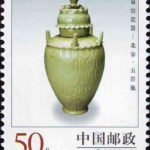
(4-1), Vase with Five Spouts – Northern Song Dinasty, 50 fen, 30*40mm
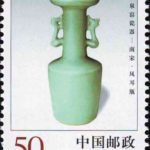
(4-2), Vase with Phoenix Ears – Southern Song Dinasty, 50 fen, 30*40mm
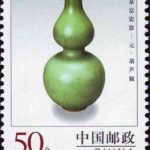
(4-3), Double Gourd Vase – Yuan Dinasty, 50 fen, 30*40mm
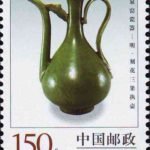
(4-4), Engraved Ewer Decorated with Three Fruits – Ming Dinasty, 150 fen, 30*40mm
Date of issue: October 13, 1998
Designers: Wang Huming; Ren Yu
Size of stamp: 30*40mm
Perforation: 12
Sheet composition: 50
Printing process: offset
Printing house: Liaoning shenyang postage stamps printing works
The Longquan Kiln boasts as one of the thousands of Chinese ceramic kilns, which has the longest ceramic making history. It was first built during the period of Three Kingdoms and the Eastern and Western Jin dynasties and ended in the late Qing Dynasty, lasting more than 1,600 years. During the Song and the Yuan dynasties, there were many kilns here producing a large number of green porcelain, which were sold at home and abroad. The Longquan Kiln has thus become well-known.
The booming period of the Longquan kiln was in the late Southern Song and the Yuan dynasties, when the quality of green porcelain was greatly raised. Around the year 1200, the advanced ceramic making technique was adopted by the Kiln to produce high-grade porcelain, which was supplied to the imperial families and high-ranking officials. In this period, the ceramic production was pushed to a new height, and varieties were greatly enriched, from living utensils to decorative and sacrificial ceramics. In the Yuan Dynasty, ceramic industry was further developed. Large plates and bowls were produced to meet the need of Mongolian nobles and Muslims in West Asia. In the Ming and the Qing dynasties, the Longquan Kiln gradually declined, but the kiln’s product quality was still high in the early stage of Ming Dynasty. The carved kettles collected by the Palace Museum were the representative works of the Longquan Kiln in the Ming Dynasty.
-

- (4-1), Vase with Five Spouts – Northern Song Dinasty, 50 fen, 30*40mm
-
- (4-2), Vase with Phoenix Ears – Southern Song Dinasty, 50 fen, 30*40mm
-
- (4-3), Double Gourd Vase – Yuan Dinasty, 50 fen, 30*40mm
-
- (4-4), Engraved Ewer Decorated with Three Fruits – Ming Dinasty, 150 fen, 30*40mm
1998年特种邮票《中国陶瓷–龙泉窖瓷器》
国家邮政局1998年10月13日发行《中国陶瓷–龙泉窖瓷器》特种邮票1套4枚。
(4-1)T 北宋·五管瓶 50分 4144.9万枚
(4-2)T 南宋·凤耳瓶 50分 4199.9万枚
(4-3)T 元·葫芦瓶 50分 4199.9万枚
(4-4)T 明·刻花三果执壶 150分 3059.9万枚
志号名称:1998-22T
版别:胶印
整版枚数:50 枚
全套面值:3.00元
邮票规格:30×40
齿孔度数:12 度
设计者:王虎鸣、任宇
印制机构:辽宁省沈阳邮电印刷厂
龙泉窑始烧于北宋早期,南宋晚期产品最为辉煌。
北宋时期龙泉青瓷尚保留着仿越窑、瓯窑和婺州窑的遗风,釉呈浅青色,薄而光亮。南宋中期以后,完全形成自身的特点,以粉青和梅子青釉著称于世,这两种釉是龙泉青瓷中最名贵的品种。从工艺学角度分析,粉青和梅子青釉是一种“石灰碱釉”。这种釉在高温中黏度较大,流动性较小,适宜挂厚釉。这种厚釉层中含有大量小气泡和未完全熔化的石英颗粒,当光线射人釉层时,釉面会使光线发生强烈散射,呈现出一种柔和淡雅如冰似玉的美感。
北宋龙泉青瓷装饰手法主要为刻花、划花、印花及贴塑等。常见纹饰在北宋多莲瓣、荷叶,南宋多云纹、水波纹、游鱼等。铭文见有印阴文“金玉满堂”及“河滨遗范”两种。
北宋龙泉窑器型有炉、瓶、盘、渣斗及塑像等,各类造型变化有多种样式。如瓶有悔瓶、龙纹瓶、虎纹瓶、五管瓶、胆瓶、鹅颈瓶等,炉则有三足、四足及八卦炉、奁式炉等。南宋时,龙泉青瓷造型更加丰富,除各类日用器皿外,文房用具中的水盂、水注、笔筒、笔架等亦常见,象棋子、鸟食罐也颇有特色。此外,仿古铜器及玉器的各式鬲、觚、觯、投壶及琮式瓶等,与北宋后期祟古之风相关。总之,宋代龙泉青瓷以釉色取胜。故宫中旧藏龙泉青瓷以南宋产品为多,釉色多为粉青釉,少数以印双鱼纹饰装饰。其上品釉色匀净、莹润如玉,梅子青釉则属罕见之物。
1998年10月13日,为了反映中国陶瓷艺术悠久灿烂的历史,国家邮政局发行了《中国陶瓷-龙泉窑瓷器》特种邮票,全套4枚。
Leave A Comment
You must be logged in to post a comment.