
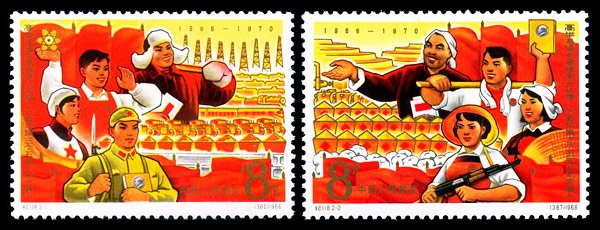
C118 Holding High the Great Banner of Mao Zedong Thought and Striving for Fulfillment of 3rd Five-year Plan Commemorative Stamps
Basic Information
Stamp Title: Holding High the Great Banner of Mao Zedong Thought and Striving for Fulfillment of 3rd Five-year Plan
Scott No: 936-937
Serial number: C118
Values in set: 2
Total face value: 16 fen
Date of issue: April 15, 1967
(2-1) Industrial Construction, 8 fen, 50.5 × 36 mm, perforation 11, sheet composition 28(4×7), quantity issued: 6,000,000
(2-2) Agricultural Construction, 8 fen, 50.5 × 36 mm, perforation 11, sheet composition 28(4×7), quantity issued: 6,000,000
Designer: Shao Bolin
Printing process: Photogravure
Printer: Beijing Postage Stamp Printing Works
Introduction
China’s 3rd Five-Year Plan (1966–1970) aimed to develop the national economy. To encourage people across the country to work toward the goals of the plan, the Ministry of Posts and Telecommunications issued this set of commemorative stamps in April 1967. The stamps carry distinctive characteristics of the era, echoing the slogan “Grasp revolution, promote production” of that period. The first stamp features industrial development scenes including Daqing oil workers, scientific researchers, textile workers and PLA soldiers, showing the dedication of the working class to national economic construction. The second stamp depicts agricultural construction scenes, including farmers from Dazhai, model female workers, female militiamen and Communist Youth League members, reflecting the commitment of agricultural workers to the development of rural production.
纪118《高举毛泽东思想伟大红旗为实现第三个五年计划而奋斗》纪念邮票
基础信息
志号:纪118(C118)
斯科特编号:936-937
全套枚数:2枚
全套面值:16分
发行日期:1967年4月15日
(2-1)工业建设,8分,50.5×36毫米,齿孔11度,整版28枚(4×7),发行量600万枚
(2-2)农业建设,8分,50.5×36毫米,齿孔11度,整版28枚(4×7),发行量600万枚
设计者:邵柏林
版别:影写版
印制厂:北京邮票厂
介绍
我国第三个五年计划(1966—1970)以推进国民经济建设为目标。为动员全国人民落实三五计划建设任务,邮电部于1967年4月发行这套纪念邮票,邮票带有鲜明的时代印记,呼应当时“抓革命,促生产”的号召。第一枚“工业建设”,画面展现大庆石油工人、科研人员、纺织女工与解放军战士,体现工人阶级投身国家工业建设的奋斗姿态;第二枚“农业建设”,刻画大寨农民、农业女劳模、女民兵、共青团员的形象,展现广大农业战线劳动者发展农业生产、投身国家建设的决心。
C118 Alzar la gran bandera del pensamiento de Mao Zedong y esforzarse por cumplir el Tercer Plan Quinquenal
Información básica
Referencia: C118
Número Scott: 936-937
Cantidad: 2 sellos
Valor total: 16 fen
Fecha de emisión: 15 de abril de 1967
(2-1) Construcción industrial, 8 fen, 50.5 × 36 mm, dentado 11, pliego 28(4×7), emisión: 6.000.000
(2-2) Construcción agrícola, 8 fen, 50.5 × 36 mm, dentado 11, pliego 28(4×7), emisión: 6.000.000
Diseñador: Shao Bolin
Impresión: Fotograbado
Impresor: Fábrica de sellos postales de Beijing
Introducción
El Tercer Plan Quinquenal (1966–1970) de China buscaba impulsar la economía nacional. Para motivar a toda la población a cumplir sus objetivos, el Ministerio de Correos emitió esta serie en abril de 1967. Los sellos conservan rasgos propios de la época, eco del lema de la época “Agarrar la revolución, promover la producción”. El primer sello representa la industria, con trabajadores petroleros, investigadores, obreras textiles y soldados. El segundo sello muestra la construcción agrícola, con campesinos, modelos de trabajo, milicianas y miembros de la Liga de la Juventud Comunista, simbolizando el esfuerzo por la producción rural.
C118 رفع الراية العظيمة لفكر ماو تسي تونغ والسعي لتحقيق الخطة الخمسية الثالثة
المعلومات الأساسية
الرقم المرجعي: C118
رقم سكوت: 936-937
العدد: طابعان
القيمة الإجمالية: 16 فن
تاريخ الإصدار: 15 أبريل 1967
(2-1) البناء الصناعي، 8 فن، 50.5 × 36 ملم، درجة التسنن 11، عدد الطوابع في الورقة 28(4×7)، الكمية: 6000000
(2-2) البناء الزراعي، 8 فن، 50.5 × 36 ملم، درجة التسنن 11، عدد الطوابع في الورقة 28(4×7)، الكمية: 6000000
المصمم: شاو بولين
طريقة الطباعة: الطباعة الضوئية المنقوشة
المطبعة: مطبعة طوابع البريد ببكين
المقدمة
هدفت الخطة الخمسية الثالثة للصين (1966–1970) إلى تطوير الاقتصاد الوطني. أصدرت وزارة البريد هذه المجموعة في أبريل 1967 لتحفيز الشعب على تحقيق أهداف الخطة. تحمل الطوابع سمات مميزة للعصر، تردد شعار العصر “الإمساك بالثورة وتعزيز الإنتاج”. يُظهر الطابع الأول العمال والباحثين في قطاع الصناعة، بينما يُظهر الثاني الفلاحين ونشطاء الإنتاج الزراعي، تجسيدًا للجهود المبذولة في البناء الوطني.
Leave A Comment
You must be logged in to post a comment.