
A stringed instrument produces tones through the vibrating strings, while the bow is drawn across them, together with the reconating body. It is acknowledged that this class of musical instruments, with a lot of varieties, appeared quite late in the history of musical instruments. Their history in China dates back to the Tang Dynasty, when Yazheng and Xiqin appeared, and the Song Dynasty, when Maweihuqin appeared. With the improvement and increase in variety of stringed instruments through more than a thousand years of development and evolvement, they became indispensable master ad accompany instruments in traditional Chinese operas and music. With rich expressiveness and outstanding imitating features, they display unique charm in solos and are popular among the Chinese people.
Chinese National Musical Stringed Instruments
Stamp Title: Chinese National Musical Stringed Instruments
Serial number: 2002-4
Values in set: 5
Denomination: 5.80 yuan
Date of issue:23rd February 2002
Designer: Yin Huili
Size of stamps: 30*40 mm
Perforation:12
Sheet composition: 20
Printing process: offset
Printer: Shenyang Post & Telecommunication Printing Works
-

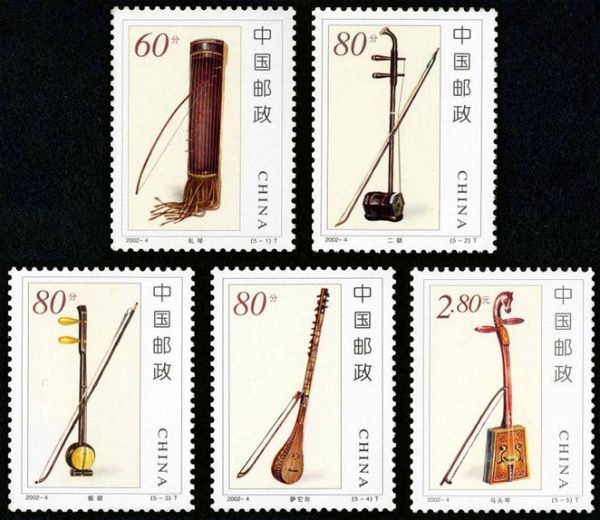
- (5-1), Yaqin, 60 fen, 30*40 mm
-
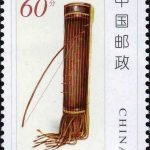
- (5-2), Erhu, 80 fen, 30*40 mm
-
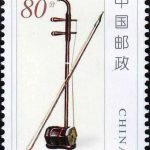
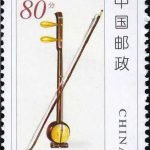
- (5-3), Banhu, 80 fen, 30*40 mm
-
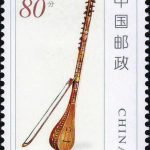
- (5-4), Satar, 80 fen, 30*40 mm
-
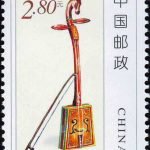
- (5-5), Matouqin, 280 fen, 30*40 mm
Knowing China Through Chinese Stamps.
2002年特种邮票《民族乐器》
国家邮政局2002年2月23日发行《民族乐器》特种邮票1套5枚。
(5-1)T 轧琴 60分 1360万枚
(5-2)T 二胡 80分 1460万枚
(5-3)T 板胡 80分 1430万枚
(5-4)T 萨它尔 80分 1420万枚
(5-5)T 马头琴 280分 1350万枚
志号:2002-4T
版别:胶印
邮票规格:30×40毫米
全套面值:580分
齿孔度数:12度
整版枚数:20 (4×5)
设计者:殷会利
印刷厂:辽宁省沈阳邮电印刷厂
中国邮政定于2002年2月23日发行《民族乐器–拉弦乐器》特种邮票1套5枚。
轧琴,又称”轧筝”,唐初(公元七世纪)我国民间出现,是我国拉弦乐器的最初形式。流行于河北邯郸以及豫北晋东南等地区,是河北地方戏曲武安平调的伴奏乐器。形制与筝相似而小。长方形音箱,面板和底板均用桐木制,面板中间拱起,略有弧度,近两端处有”梁”,即弦枕。底板平直,中央开有直径约5厘米的音孔。音色细腻柔和,演奏方法独特。河北省邯郸市邮政局(056002)。
二胡,胡琴的一种,也称胡琴。二胡在演奏姿势上和其它胡琴类乐器大同小异,也是左手持琴,右手执弓。有高胡、中胡、大胡、低胡等多种形制。二胡在中国的民族乐队和民族丝竹乐队当中,常常担任主奏的角色,相当于西洋交响乐团中的小提琴,因此,也称它为中国乐器中的”王子”。
板胡,又称梆胡。因琴筒用薄木板粘成而得名。最初主要流行于我国的东北、华北和西北各地,被当地的许多地方戏曲和曲艺所吸收。河北梆子、评剧、豫剧、吕剧、晋剧、秦腔、兰州鼓子和陕北道情等,都是用板胡作为音乐的主要伴奏乐器。板胡有独奏板胡和地方剧种伴奏板胡多种。擅于演奏高亢、热烈、欢快的曲调。在民族乐队中为高音乐器,担任弦乐的最高音部,常作各种伴奏乐器的领弦。
萨它尔,流行于新疆维吾尔自治区。最早于十四至十五世纪已流行于南疆喀什一带,后传至北疆和东疆,清代列入宫廷回部乐。张十至十四条弦,左侧第一条铜弦为主奏弦,其余为钢丝共鸣弦。发音清脆刚健。本世纪五十年代改革制成中音萨它尔,全长120厘米,琴杆稍短,指板上设塑料制品位;高音萨它尔,全长87厘米,音箱相应缩小,均在乐队合奏中使用。新疆喀什地区邮政局(844000)。
马头琴,因琴头雕有马头而得名,公元十三世纪初便在蒙古族中广泛流传。为独奏乐器,也可用于器乐合奏和为说唱、民歌、舞蹈伴奏或参加民族乐队演奏。马头琴多为是演奏者自制自用,拉奏方法与其他拉弦乐器不同,弓子的马尾是在两弦外面擦弦,发音柔和浑厚,音色宏阔低沉,富有草原风味。内蒙古呼和浩特市邮政局。
Leave A Comment
You must be logged in to post a comment.