
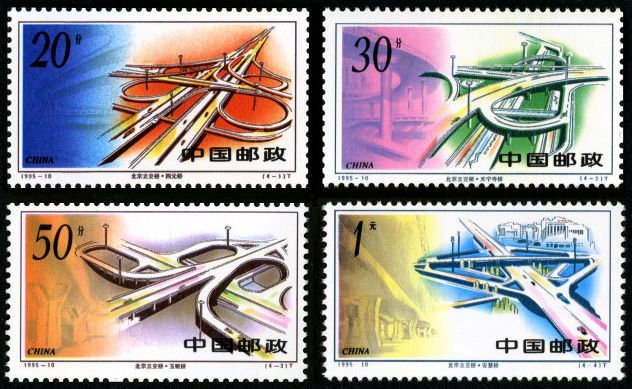
1995-10, Interchanges in Beijing《北京立交桥》
Stamp Title: Interchanges in Beijing
Scott No: 2575, 2576, 2577, 2578
Serial number: 1995-10
Values in set: 4
(4-1), Siyuan Flyover, 20 fen, 52*31mm
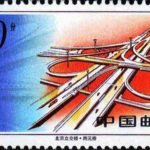
(4-2), Tianning Temple Flyover, 30 fen, 52*31mm
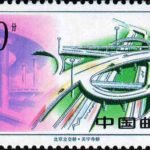
(4-3), Yuting Flyover, 50 fen, 52*31mm
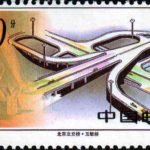
(4-4), Anhui Flyover, 100 fen, 52*31mm
Date of issue: June 20, 1995
Designers: Yan Bingwu; Hu Zhenyuan
Size: 52*31mm
Perforation: 11.5
Sheet composition: 40
Printing process: gravure
Interchanges are multi-layer flyovers that have been built over the past several decades. With interchanges. Vehicles and pedestrians from all directions can cross each other by their own way without waiting for traffic light.
Interchanges generally fall into two categories, the simple flyovers and complicated interchanges. The former can only ensure the cross of vehicle at both the upper and lower layers, while the latter can guarantee the cross of vehicles at various layers and thus need more slip roads and occupy more land.
Interchanges have been developing rapidly over the past several decades since they can prevent vehicles from reducing speed and starting again at crossings and bring about considerable social-economic gains. China started to vigorously develop interchanges in mid-1970s. The first interchange in Beijing is the Fuxingmen Interchange which was built in 1974. Today, there are several hundreds of interchanges along the second, third and fourth ring roads of the city. In terms of architectural structure, the interchanges, with two to four layers, include simply flyovers and those in the shape of cloverleaf and butterfly, with H-and Y-type and single-column bridge piers.
At present, the largest interchange in China is the Siyuan Interchange in Beijing. It is a four-layer large interchange composed of 26 bridges, with the span between the single-column bridge piers being the largest in interchanges of the country. The bridges of the Siyuan Interchange, which covers 400,000 square meters of land, have a total length of 2.8 kilometers and a total area of 40,000 square meters.
-

- (4-1), Siyuan Flyover, 20 fen, 52*31mm
-
- (4-2), Tianning Temple Flyover, 30 fen, 52*31mm
-
- (4-3), Yuting Flyover, 50 fen, 52*31mm
-
- (4-4), Anhui Flyover, 100 fen, 52*31mm
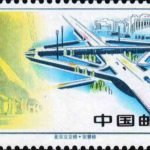
1995年特种邮票《北京立交桥》
国家邮政局1995年6月20日发行《北京立交桥》特种邮票1套4枚。
(4-1)T 北京·四元桥 20 分 5253.7万枚
(4-2)T 北京·天宁寺桥 30 分 2745.7万枚
(4-3)T 北京·玉蜓桥 50 分 3103.7万枚
(4-4)T 北京·安慧桥 100 分 2819.7万枚
志号名称:1995-10T
版别:影写
整版枚数:40 枚
全套面值:2.00元
邮票规格:52 × 31毫米
齿孔度数:11.5度
设计者:阎炳武、呼振源
印制机构:北京邮票厂
立交桥是城市进入飞速发展时期的重要标志。它是一种多层次立体交叉的桥梁。美国1921年建成了世界第一座分离式立交桥,1928年又首次建成了苜蓿叶形互通式立交桥,从此道路交通开始从平面向立体发展。
城市立交桥是现代化都市繁荣发达的重要标志。党的十一届三中全会以来,北京市现代化立交桥建设成就显著。1974年北京首座立交桥——复兴门桥建成,开了首都城市交通立体化的先河。为了促进经济的飞速发展,适应交通负荷的增长速度,北京市从1987年8月1日起,先后进行了东厢、西厢、南厢、南三环、东三环、西北二环、西北三环道路的改造工程,奋战八年,到1994年9月25日止,北京市的立交桥从14座增加到120多座。其总数占全国城市立交桥总数的70%。令世人瞩目。
1995年6月20日,为展现北京现代化的城市面貌,邮电部发行了《北京立交桥》特种邮票,全套4枚。
Leave A Comment
You must be logged in to post a comment.